What is glamping, and what’s in the tent?
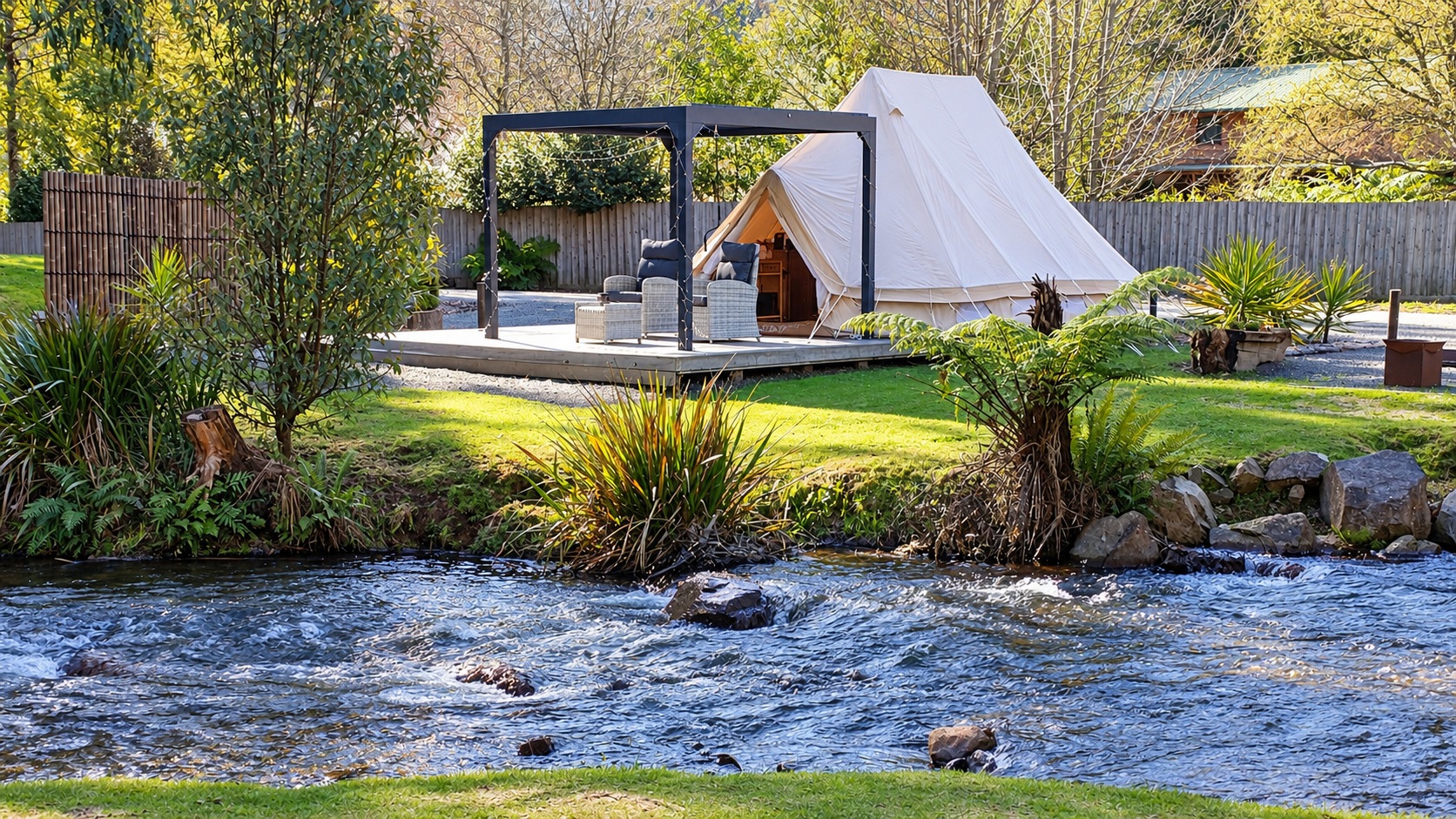
Glamping is a tent somebody else has already put up, furnished and heated, with a real bed made up inside it. You arrive with a bag rather than a boot…

The sound of kookaburras breaking the dawn.
A lyrebird scratching through the undergrowth. Black cockatoos gliding over treetops as the day fades. For many travellers, these moments are what turn a glamping stay in Marysville into something unforgettable. At Marysville Holiday Park, the comfort of canvas tents meets the immediacy of the bush, where wildlife is close enough to hear, see, and sometimes even photograph from your deck chair.
The Kookaburra tent is named after one of Australia’s most recognisable birds, and with good reason. At sunrise, their chorus carries across the Steavenson River, rolling through the valley in laughter-like calls that feel distinctly Australian.
Visitors often catch sight of them perched on overhanging branches above the river, scanning the water for movement. The still surface makes the perfect reflection shot, with a kookaburra waiting patiently for its next meal. In the evenings, families of kookaburras gather together, their silhouettes framed against the fading light.
Perfect moments for photos include:
The Lyrebird tent honours one of Marysville’s most intriguing residents. Known for extraordinary mimicry, the lyrebird often stays hidden in the ferns, yet its song reveals its presence. Guests who rise early may hear a medley of calls that sound like half a dozen different species at once, all coming from a single bird.
Photographing a lyrebird requires patience, but the rewards are remarkable. Their tail feathers form intricate patterns when displayed during courtship, creating striking imagery that feels like a natural sculpture. Parks Victoria identifies the lyrebird as a key indicator of a healthy forest, underscoring the significance of these encounters.
Photo opportunities arise when:
The Black Cockatoo tent reflects another striking species often seen wheeling through the skies above Marysville. With wingspans stretching over a metre and a slow, deliberate flight, black cockatoos are impossible to ignore. Their cries, haunting and powerful, echo across the valley and signal their presence before they come into view.
Visitors commonly spot yellow-tailed black cockatoos feeding on banksias or glossy black cockatoos stripping seeds from casuarina cones. Their powerful beaks and dark plumage make for dramatic photography, especially when captured against the pale blue of the mountain sky.
Scenes worth photographing include:
Glamping here is about more than birds. The Steavenson River carves through a corridor of ferns, wattles, and towering eucalypts that shift in character with the seasons. Guests often sit on the deck of their tent and watch the colours change around them.
These natural shifts mean every stay offers a new backdrop for photography and memory-making.
While the park itself offers abundant sightings, Marysville’s surroundings extend the possibilities.
Parks Victoria manages many of these areas, and their visitor information outlines how to enjoy wildlife responsibly.
Each of Marysville Holiday Park’s glamping tents is named after a bird you can realistically encounter in the surrounding bush. This is not marketing hyperbole but a daily reality. Guests sipping coffee on their verandah may look up to see cockatoos wheeling above, or hear the distinct laughter of kookaburras across the river. Lyrebirds remain elusive, but the reward of spotting one feels like being let into a secret.
For travellers seeking to feel part of the landscape rather than apart from it, these moments matter. The combination of comfort and proximity to wildlife creates a rare experience so close to Melbourne. Every sighting becomes both a memory and a photo to carry home. Kookaburras, lyrebirds, black cockatoos, wombats, and wallabies are commonly spotted around the park and nearby reserves. Early mornings in damp gullies are best. Their calls often reveal them before they are seen. Yes. Yellow-tailed black cockatoos are often seen in small groups, calling loudly as they fly overhead. Yes. Birds and wombats are regularly sighted along the river and within the park grounds. Steavenson Falls, Lake Mountain, and Cathedral Range State Park are excellent choices for spotting native species. The tents are named after species found in the region, and encounters with these birds are common, offering both comfort and authentic connection.