
 1130 Buxton Road, Marysville Victoria, 3779
 03 5963 3247
 Email Us
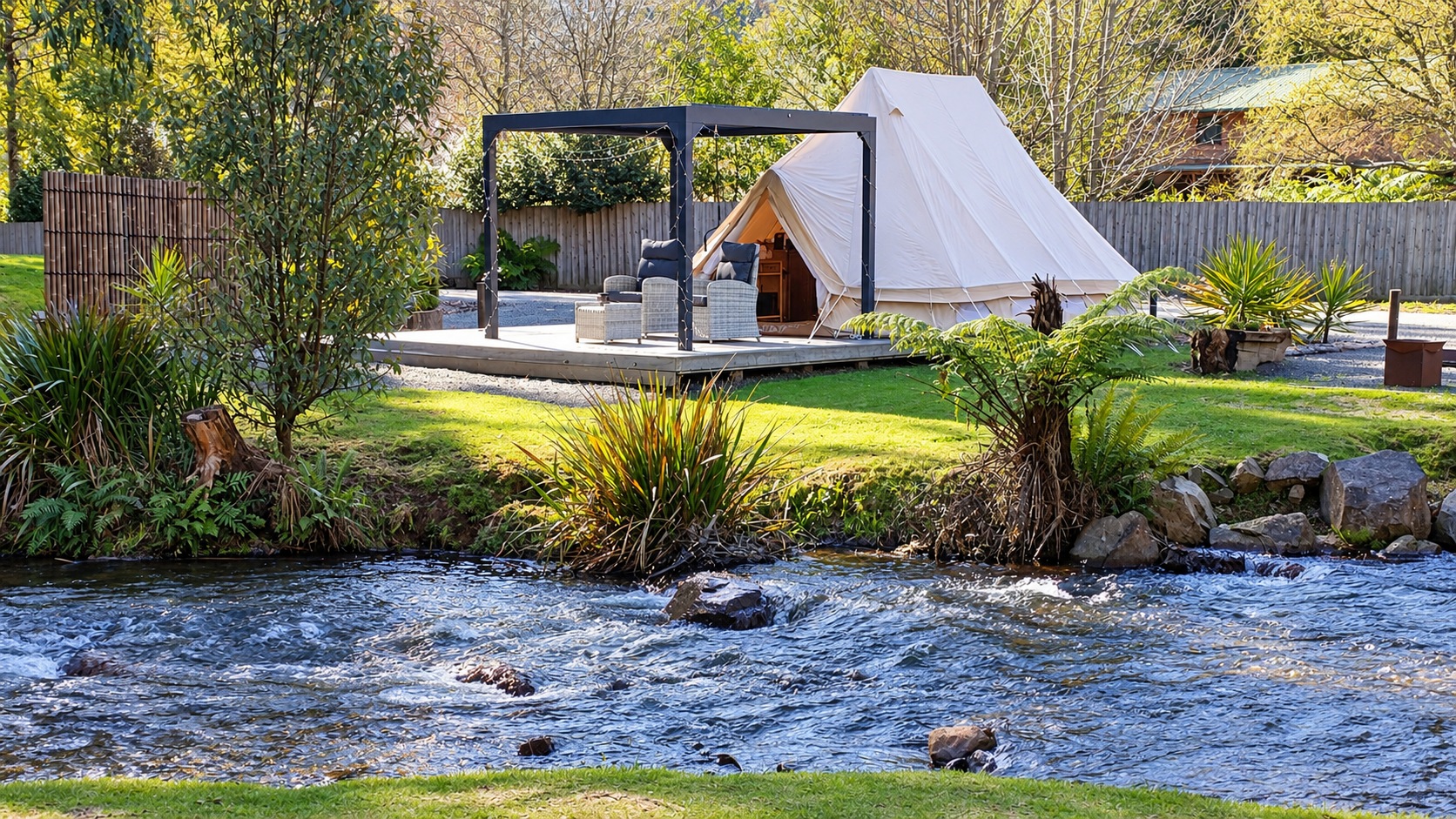
Glamping is staying in a furnished tent that somebody else has already set up. Inside there is a real bed, made up with linen, standing on a solid floor rather than on grass. There is power, heating and cooling, lighting, and a deck outside with somewhere to sit. You arrive with a bag instead of a boot full of gear, and there is nothing to pitch. A glamping tent stays where it is put, which is why it can hold furniture no camping tent could carry.
What is glamping?
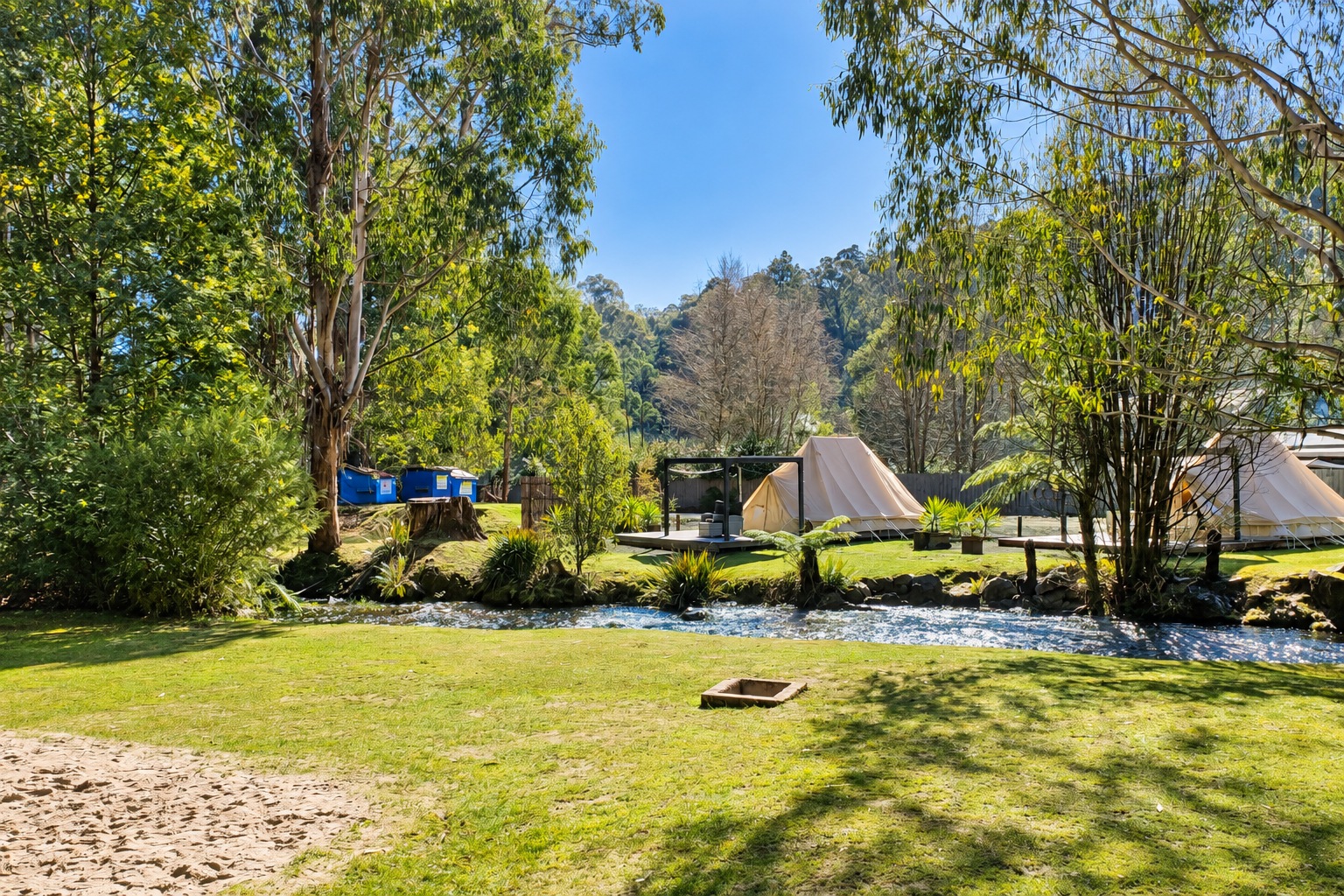
Glamping is a night outdoors with the comfort of a room. The tent is pitched, furnished and heated before you get there, and it stays up all year.
The word is invented. It joins glamorous and camping, and dictionaries first recorded it in the early 2000s. It caught on because there was no other word for the thing.
Glamping describes a standard of stay, not one particular structure. That is where the confusion starts. Two places can both sell glamping and offer very different nights. Across Victoria the word covers a wide spread of places. There is a separate rundown of what is on offer around the state.
In Australia it most often means a large canvas tent on a permanent base, at a holiday park or on private land. It is sold by the night, like a room, and booked in advance rather than turned up to.
What do you get in a glamping tent?
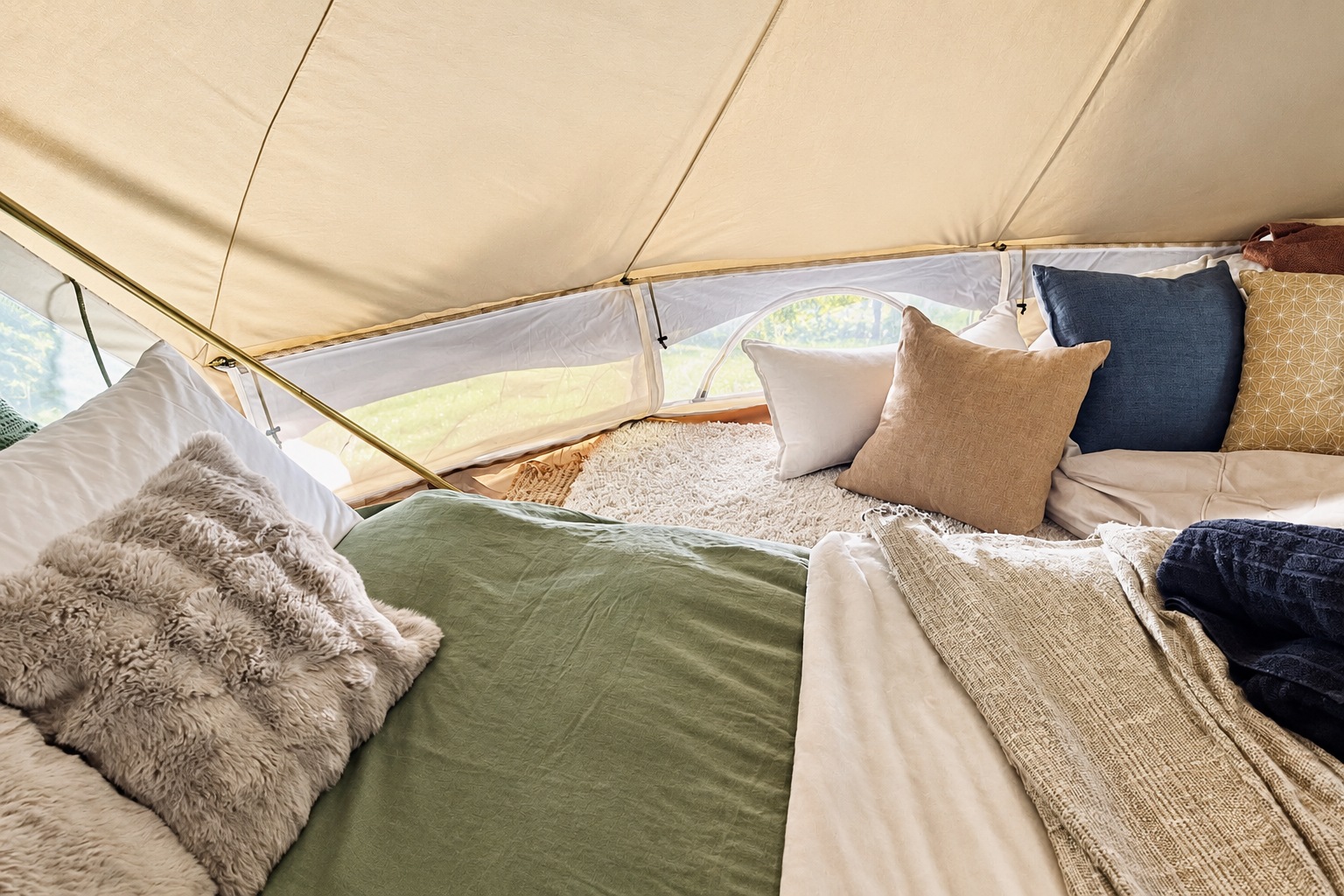
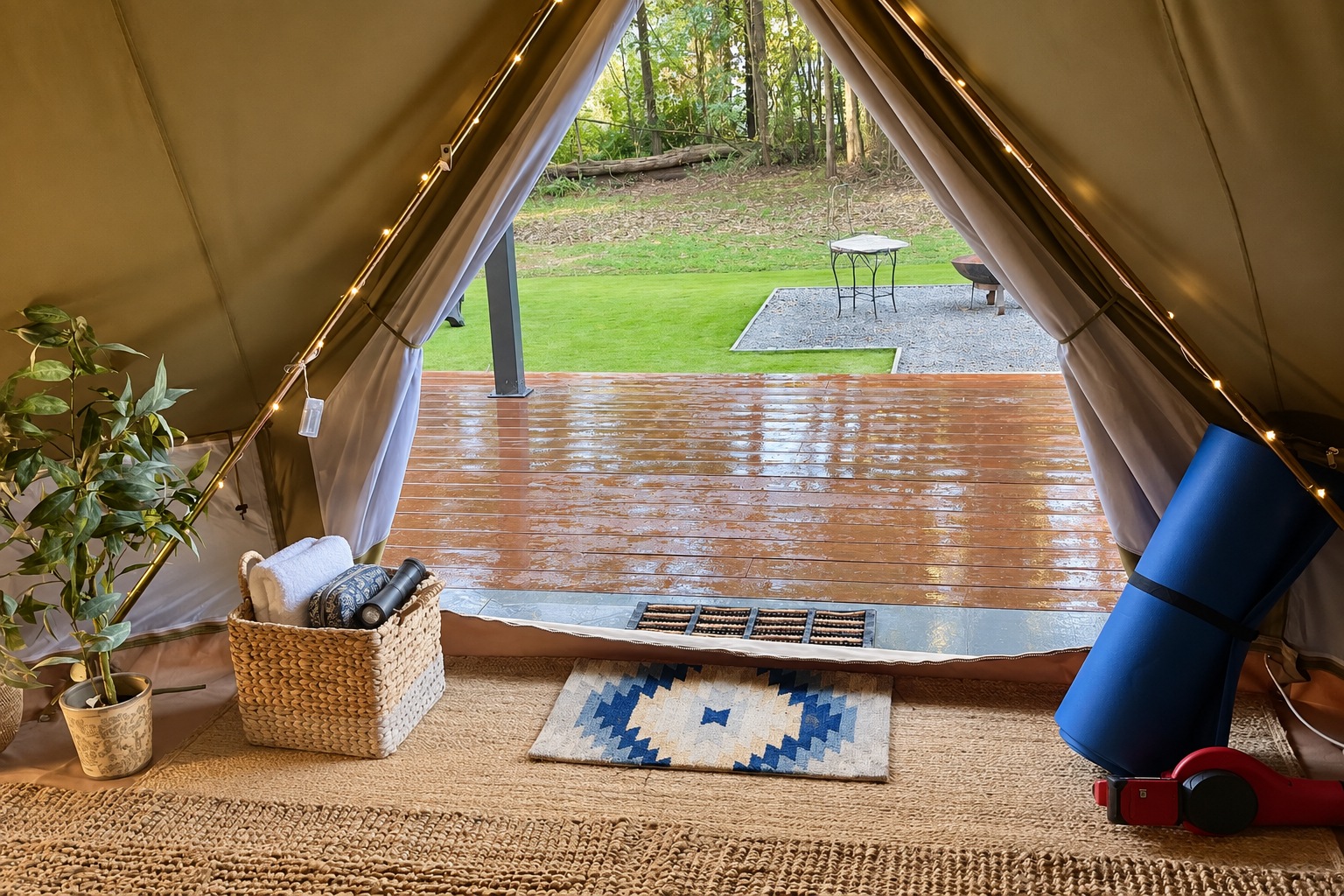
A glamping tent is furnished before you arrive, so the list of what is in it reads closer to a hotel room than to a campsite.
Tents come in different shapes, and a bell tent, a safari tent, a dome and a yurt are not the same night’s sleep. There is a longer piece on what each one is like to stay in.
- A proper bed. Usually a queen, with a mattress, linen and pillows already on it. You are not sleeping on the ground and you are not bringing a sleeping bag.
- A solid floor. Most tents sit on a fixed timber deck, so there is nothing damp underfoot and nothing to level.
- Power. Hard-wired power points rather than a battery. Phones charge, lamps work, and a heater can run all night.
- Heating and cooling. Often a reverse-cycle split system, which is the wall-mounted air conditioner that heats as well as cools.
- Something to make a hot drink. A kettle at the least, often a coffee machine and a microwave, and sometimes a small fridge.
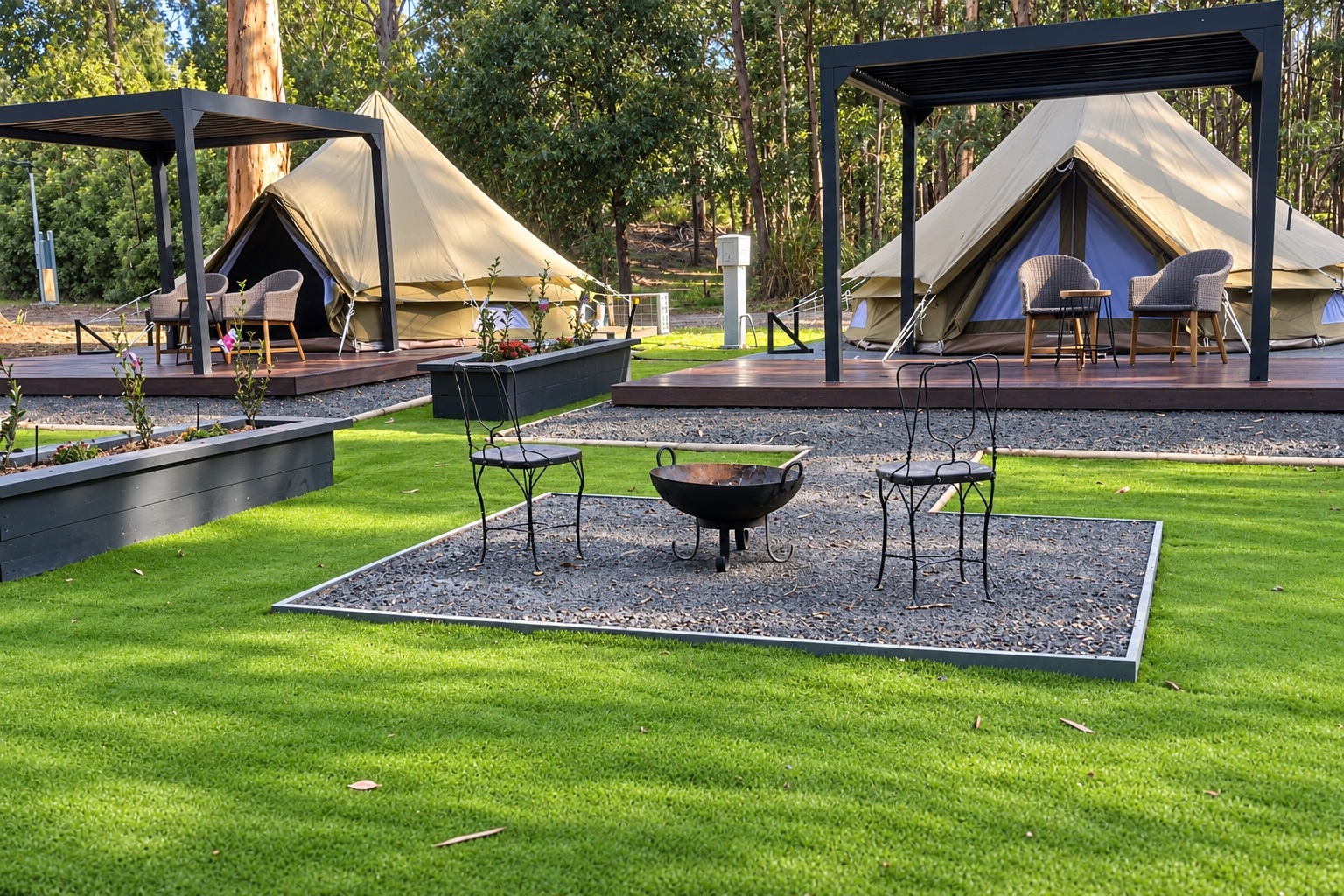
- Outdoor space. A deck with chairs, frequently a gazebo over it, and in many places a firepit.
The three tents here are the worked example. Two are round bell tents five metres across, and one is a larger safari-style tent, six metres by four. Each has its own timber deck on the riverbank. All three carry the queen bed, the split system and hard-wired power. Each has a coffee machine, a kettle and a microwave. Outside there is a deck with a gazebo and a firepit. The biggest adds a fridge, a separate seating area and a TV. The two bell tents are the softer fit-out, with rugs and cushions through them. All three take couples only, and the glamping area is kept free of children and dogs on purpose.
One thing is usually not in the tent, and it is the one people assume is there. Most canvas glamping tents share an amenities block a short walk away rather than having a bathroom of their own. The shared bathroom is the part people are least sure about. There is a piece written for people who like the idea but not the camping.
What the word glamping covers, and what it does not
Glamping is not a protected word. Any operator can use it for whatever they have put up, and plenty do.
At some parks glamping means a canvas tent. At others it means a pod, a hut or a small built cabin with a bed in it. Those are different stays, and a listing photo does not always make clear which one you are booking.
So read the words before you book. If the page says tent, expect canvas, a deck and a shared bathroom. If it says cabin or pod, expect walls, a door and often a bathroom inside.
Here, glamping means a tent. Cabins are a separate thing at this park with a separate name, and which of the two suits your trip is worth weighing up on its own.
How glamping differs from camping
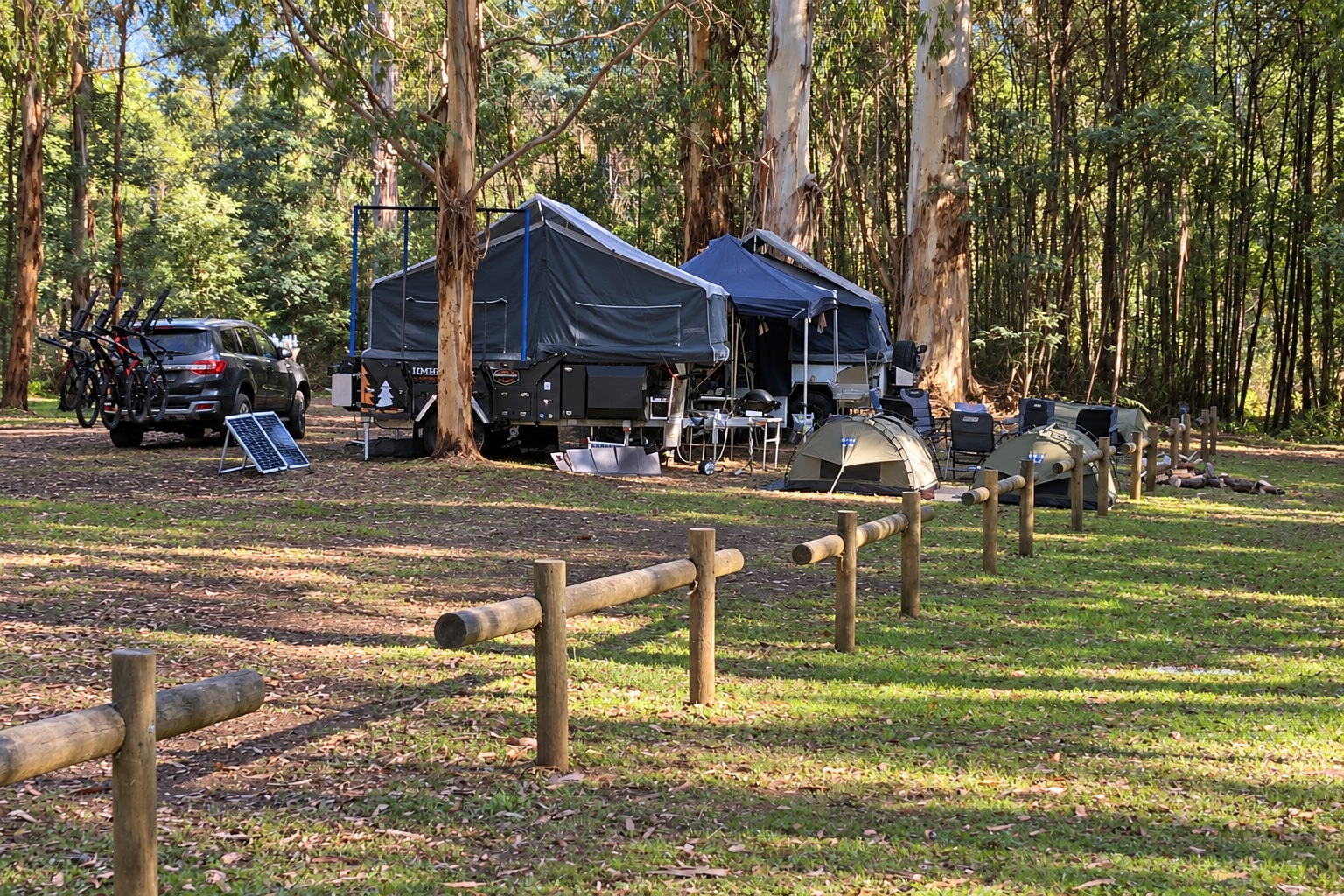
The difference is not comfort alone. It is what you carry, and what is waiting for you when you arrive.
Camping asks you to bring the shelter and build it. Tent, poles, pegs, mat, sleeping bag, light, and something to cook on. Glamping asks you to bring clothes, food and whatever you want to drink.
The clearest difference is the first half hour. Camping starts with work, in whatever weather you were given. Glamping starts with the kettle, because the bed is made and the tent is at temperature before you walk in.
The trade is control. A camper picks the spot and sets it up their own way. A glamper takes the tent as it stands, in the place it was built. There is a list of what is provided and what to bring that covers the difference in practical terms.
Where do you shower when you are glamping?
In most cases, in a shared amenities block a short walk from your tent, with hot showers, toilets and basins.
A lit path usually runs from the tents to the block. It is still worth taking a torch. Bush dark is properly dark, and the walk back is the one you do at night.
Some operators do run tents with an ensuite bathroom inside. They are less common and they cost more, so check the listing rather than assuming it either way.
From the deck of a tent beside the Steavenson River, you hear water all night. The bush sits close in on three sides, and the town is a few minutes’ walk up the road.
The three glamping tents at Marysville Holiday Park are not identical. The right one depends on whether you want the extra room or the softer fit-out. Have a look at the glamping tents and what each one holds before you pick a night.
Frequently asked questions
What does glamping mean?
It is one word made from two, glamorous and camping. In practice it tells you the accommodation is already set up. It is comfortable enough to sleep in without gear of your own. It does not tell you what that accommodation is made of.
Is glamping the same as camping?
No. With camping, the shelter and everything in it comes out of your car and goes up by hand. With glamping it is already standing when you book it, and it stays standing after you leave.
What do you need to bring glamping?
Enough for a couple of nights away, and no equipment. Pack as you would for a hotel. Add food if you plan to eat in, and a torch for the path after dark.
Is glamping only for couples?
Not as a rule. Glamping describes the standard of the stay rather than who it is for. That changes from one operator to the next. The riverside tents described here are set up for two and kept free of children on purpose.