
 1130 Buxton Road, Marysville Victoria, 3779
 03 5963 3247
 Email Us
If you’ve started shopping for glamping in Victoria, you’ll have noticed the listings don’t really explain what they’re selling you. Glamping in a tent means something different at every operator. One calls theirs a bell tent. The next says twin-pro or safari. Then there’s domes, bubbles, yurts, pods and a handful of other names that tend to come without a photo big enough to tell what’s different.
The shape of the tent matters more than it sounds. It changes how warm you stay on a cold night, whether you can stand up without ducking, how much furniture fits inside, and whether the wind rattles you awake at 3am. This article breaks down the main glamping tent types you’ll come across in Victoria, what each is like to sleep in, and which one tends to suit which trip.
The common types of glamping tents in Victoria
Most Victorian glamping operators use one of six or seven tent styles. The canvas ones (bell, safari, yurt) are the classic glamping shapes. The solid-walled ones (domes, pods, A-frames) stretch the definition, but booking platforms group them under the same category so they’re covered here. You’ll see them listed from the Mornington Peninsula and Yarra Ranges to Gippsland, the Macedon Ranges and the High Country.
Bell tents
A bell tent is the round canvas tent you see in most glamping photos. It has one central pole, a circular footprint, and canvas walls that slope down to the ground. Victorian operators typically use 4m, 5m or 6m diameters.
Bell tents are popular because they look the part. The single-pole structure, the canvas walls, the traditional shape. They breathe well in summer, which matters when a January heatwave rolls through. The round layout also feels more spacious than the floor area suggests, because the ceiling above you is a full dome.
Trade-offs worth knowing: full standing height is only near the centre pole, so moving around the edges means ducking. The circular floor makes furniture placement awkward. And bell tents are more wind-sensitive than rectangular shapes. A properly pegged bell tent on a fixed deck is solid; a loosely anchored one in exposed country can move around on a gusty night.
At Marysville Holiday Park, the Kookaburra tent is a 5m traditional bell tent on a fixed deck beside the Steavenson River. It has a queen bed, reverse-cycle split system for heating and cooling, and a firepit and gazebo outside.
Bell tents suit couples who want the classic glamping look and don’t need much indoor floor space. They’re at their best in warmer weather and on a fixed deck.
Dome tents and stargazing bubbles
Dome tents are curved structures with framed walls. Geodesic domes use triangular panels arranged into a sphere. Bubble-style domes use inflated clear PVC for a transparent shell. Sizes vary, though stargazing domes tend to be 4m to 5m across.
The appeal is obvious from the first photo: you can see the sky. If the dome has clear panels, you fall asleep looking at stars and wake up with the morning light on your face. For a one or two-night trip in clear weather, it’s hard to beat.
The trade-offs are worth weighing. Clear panels lose heat faster than insulated walls once the sun goes down, so some domes struggle in cold weather without active heating. Privacy depends heavily on site design. And domes tend to sit at the luxury end of the market, which narrows availability.
Bubble Retreats at Agnes in South Gippsland, looking across to Wilson’s Prom, is a well-known Victorian example. Two star-gazing bubbles with split-system heating and cooling, adults only, booked out months ahead.
Domes and bubbles suit couples on a short special-occasion stay, guests who value the view over indoor space, and anyone willing to pay a premium for a photogenic experience.
Glamping pods and tiny cabins
Pods are solid-walled structures, usually timber or composite, designed to look like small modern cabins. They’re technically not tents at all, but most booking platforms list them under glamping.
Pods are popular because they work year-round. Double-glazed windows, insulated walls, proper electricity and often private bathrooms. You don’t worry about wind, rain, condensation, or whether the tent flaps are fastened down. For anyone who wants the in-nature feeling without the weather lottery, pods split the difference.
The trade-off is atmosphere. A pod is a small cabin. You’re not sleeping under canvas, you’re not hearing rain on fabric, and you’re not unzipping a front flap to a morning view of the trees. Some people feel they’ve missed the point of glamping.
Park Lane Holiday Park in the Yarra Valley runs glamping pods as part of a broader site, and similar setups show up at operators across Gippsland and the High Country.
Pods suit travellers who want the comfort and reliability of a cabin with a bit more character, winter glampers, and anyone travelling with laptops or gear they want kept dry.
Vintage caravans and other quirky stays
A handful of Victorian operators work with less common formats: restored vintage caravans with glamping-style interiors, gypsy wagons, treehouses and converted shipping containers. These suit people who want something a bit different and are less hung up on the traditional glamping look. Availability is limited, specifics vary operator to operator, and photos are your best guide to what you’re actually booking.
Safari tents (including twin-pro styles)
A safari tent is rectangular with multiple poles, usually a ridge pole along the top, and vertical or near-vertical walls. Twin-pro is a common variant with two central poles. Sizes typically run from 3m x 5m up to 6m x 10m, depending on the operator.
Safari tents work because the headroom is consistent across the whole floor. You can stand up near the walls, not just in the centre, which makes a real difference on a longer stay. The rectangular shape fits furniture properly (bed, chairs, a small desk, a lounge), so a safari tent tends to feel like a room rather than a camping shelter.
Trade-offs: they don’t have the iconic look of a bell tent, so they photograph more like hotel rooms than campsite magic. The larger canvas surface area also means more condensation on cold, still nights if the tent isn’t well ventilated.
Marysville Holiday Park has two twin-pro safari tents, Black Cockatoo and Lyrebird, both 6m x 4m on elevated fixed decks with reverse-cycle climate control. Each has a queen bed, two occasional chairs, coffee machine and firepit.
Safari tents suit couples who want space to spread out indoors, people staying more than two nights, and anyone travelling in shoulder seasons where the weather can’t be relied on.
Yurts
A yurt is a traditional Mongolian structure with a round timber lattice frame and thick felt or canvas walls. The roof has a central crown the wooden rafters fan out from. Yurts feel more like buildings than tents, because they are.
Yurts work in Victoria because the insulated wall is thicker and warmer than canvas. They’re quiet inside. The round shape gives the same feeling of space as a bell tent but with straighter walls, so furniture fits better. And they’re rare enough that a stay in one feels like a different kind of trip.
Trade-offs: yurts are uncommon in Victoria, so availability is limited and you usually need to book well ahead. They’re heavier structures, so they tend to be fixed installations rather than portable setups. And they don’t have the canvas-under-a-starry-sky feel some people are chasing.
Yurt Hideaway in Tootgarook on the Mornington Peninsula is one of the few dedicated yurt stays in the state. It’s a 6m Mongolian yurt with felt insulation, hardwood floors, heating and cooling, and an outdoor kitchenette and bathroom.
Yurts suit couples who want a cosy, quiet, year-round stay with more substance than canvas. They handle shoulder seasons and mild winters better than most tent styles.
A-frame cabins
A-frames are triangular timber structures, tall at the front, sloping down sharply to the floor at the sides. Victoria has a long history of A-frames in the mountain country, and newer glamping-style A-frames come with queen beds, fireplaces and picture windows.
They work for the same reason pods do, with more visual character. The pitched roof makes for a high interior ceiling, the front window is usually oversized, and wood-burning fireplaces pair well with the cabin-in-the-woods atmosphere. They handle cold weather about as well as any glamping option.
The trade-off is the same as pods: you’re in a cabin, not a tent. If canvas and open air are the point, an A-frame won’t deliver it.
Cosy Tents at Yandoit, fifteen minutes from Daylesford, runs both bell tents and luxury A-frame cabins on the same site, which makes it a rare operator where you can compare the two directly.
A-frames suit winter stays, cosy-weekend-in-the-mountains trips, and couples who want a fireplace and a view.
Match the tent type to the season, the trip length, and the weather you expect.
- By season. Summer suits bell tents and open-canvas styles that breathe well. Winter suits safari tents with good heating, yurts, pods and A-frames. Shoulder seasons work for almost anything that has a reverse-cycle split system.
- By trip length. For one night, any type works. For two or more, pick something with enough indoor space to lounge and store gear properly. Safari tents, yurts, pods and A-frames all beat bell tents and domes on longer stays.
- By weather sensitivity. If you’re booking somewhere exposed to wind, avoid bell tents that aren’t on a proper fixed deck with guy ropes. If you’re booking in the cold months, domes with unlined clear panels are the riskiest call.
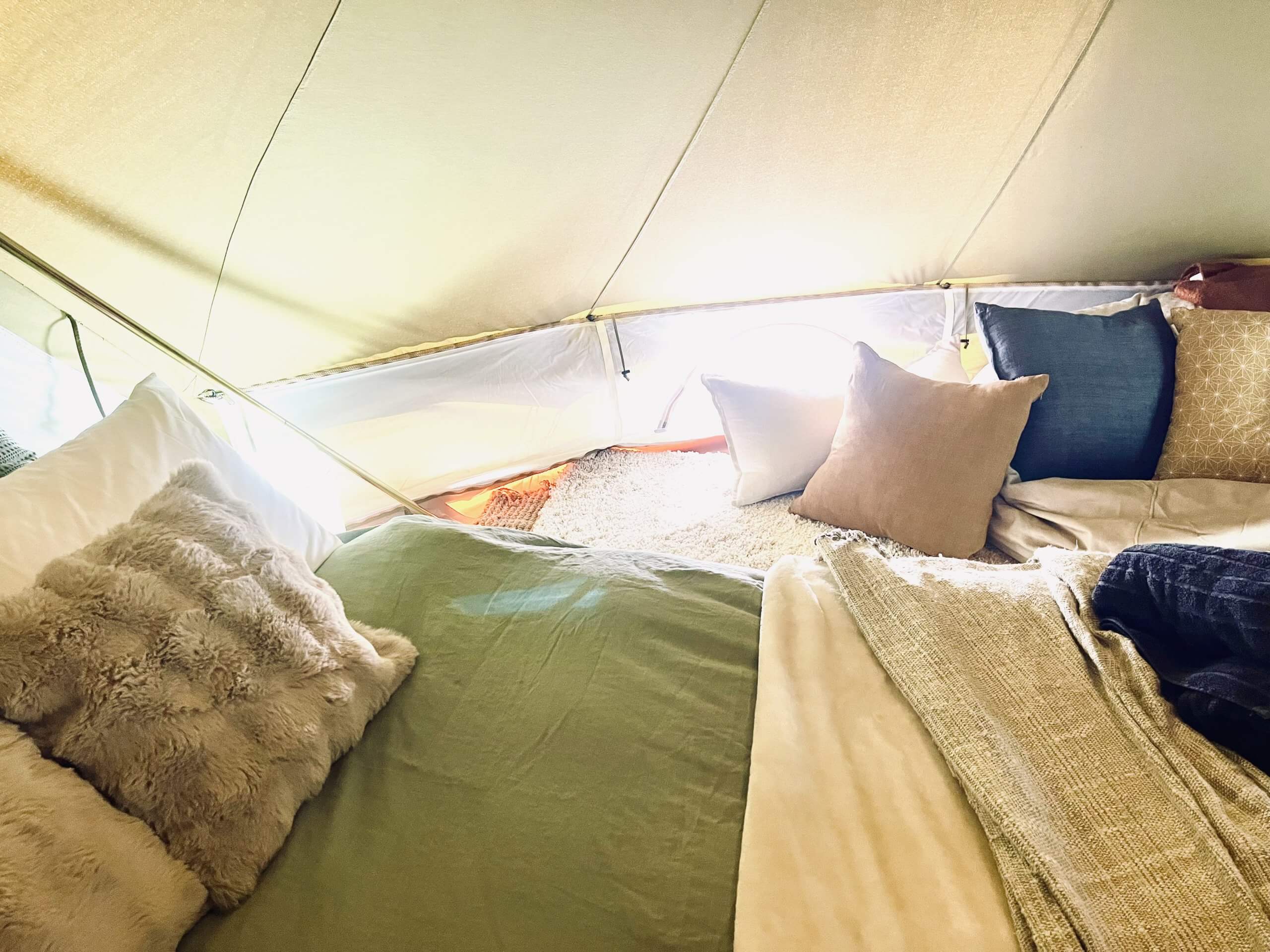
Glamping tent types at a glance
The table below is a summary of the tent types covered above. Use it as a quick reference when you’re comparing operator listings.
| Tent type | Typical size | Best for | Watch out for |
|---|---|---|---|
| Bell | 4–6m diameter | Warm-weather couples’ stays, classic look | Limited standing height near walls, wind-sensitive |
| Safari / twin-pro | 3m x 5m to 6m x 10m | Longer stays, shoulder-season weather | Less iconic look, condensation in cold snaps |
| Dome / bubble | 4–5m across | Stargazing, short special-occasion stays | Heat loss through clear panels, privacy |
| Yurt | 5–6m diameter | Year-round use, quiet retreats | Rare in Victoria, book well ahead |
| Pod | Cabin-sized | Winter glamping, reliability | Less canvas atmosphere |
| A-frame | Cabin-sized | Cold-weather stays with fireplaces | Not a tent in the traditional sense |
| Vintage caravan | Varies | Photographers, novelty seekers | Check photos carefully, variable fitouts |
Glamping tents at Marysville Holiday Park
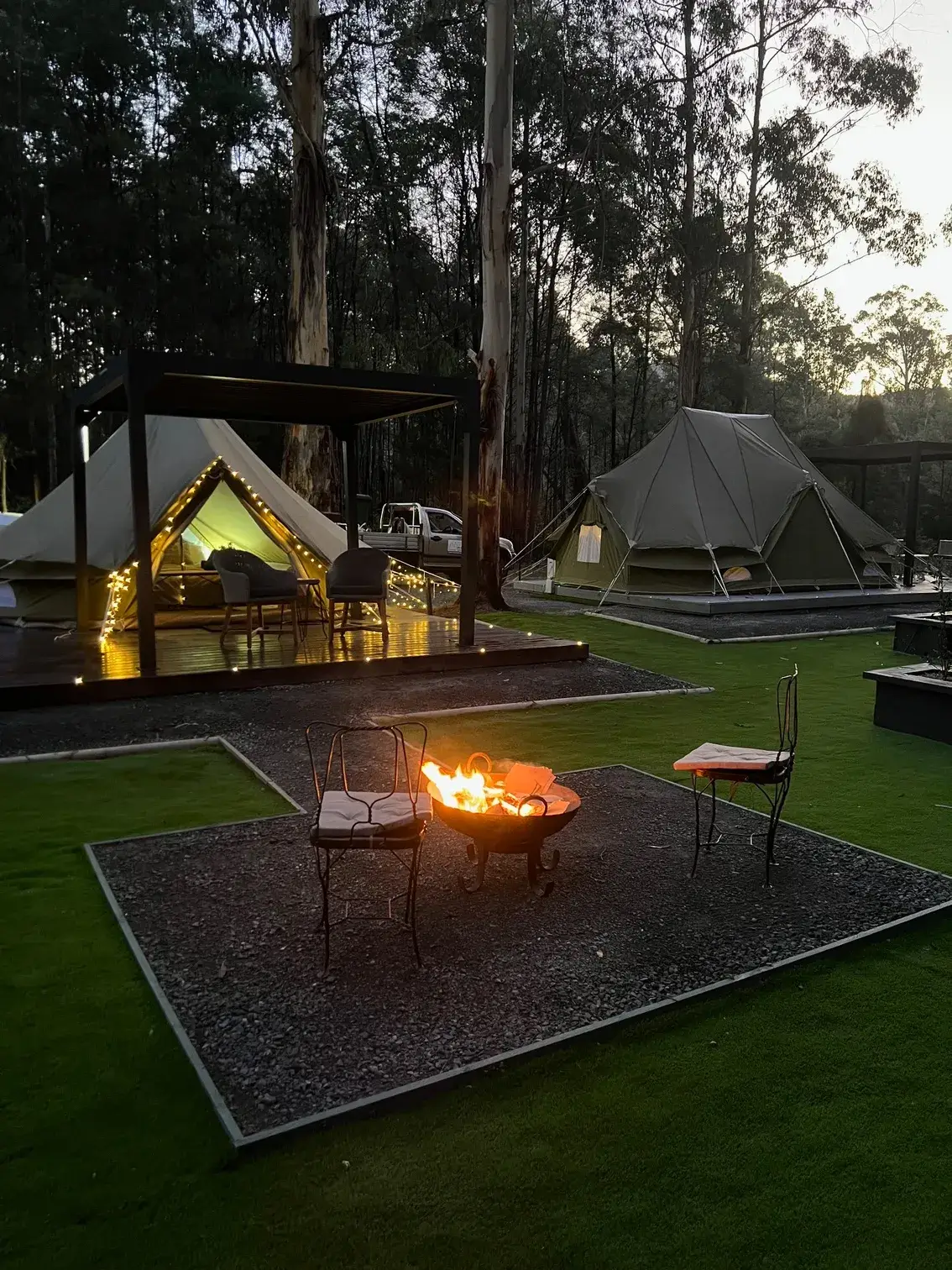
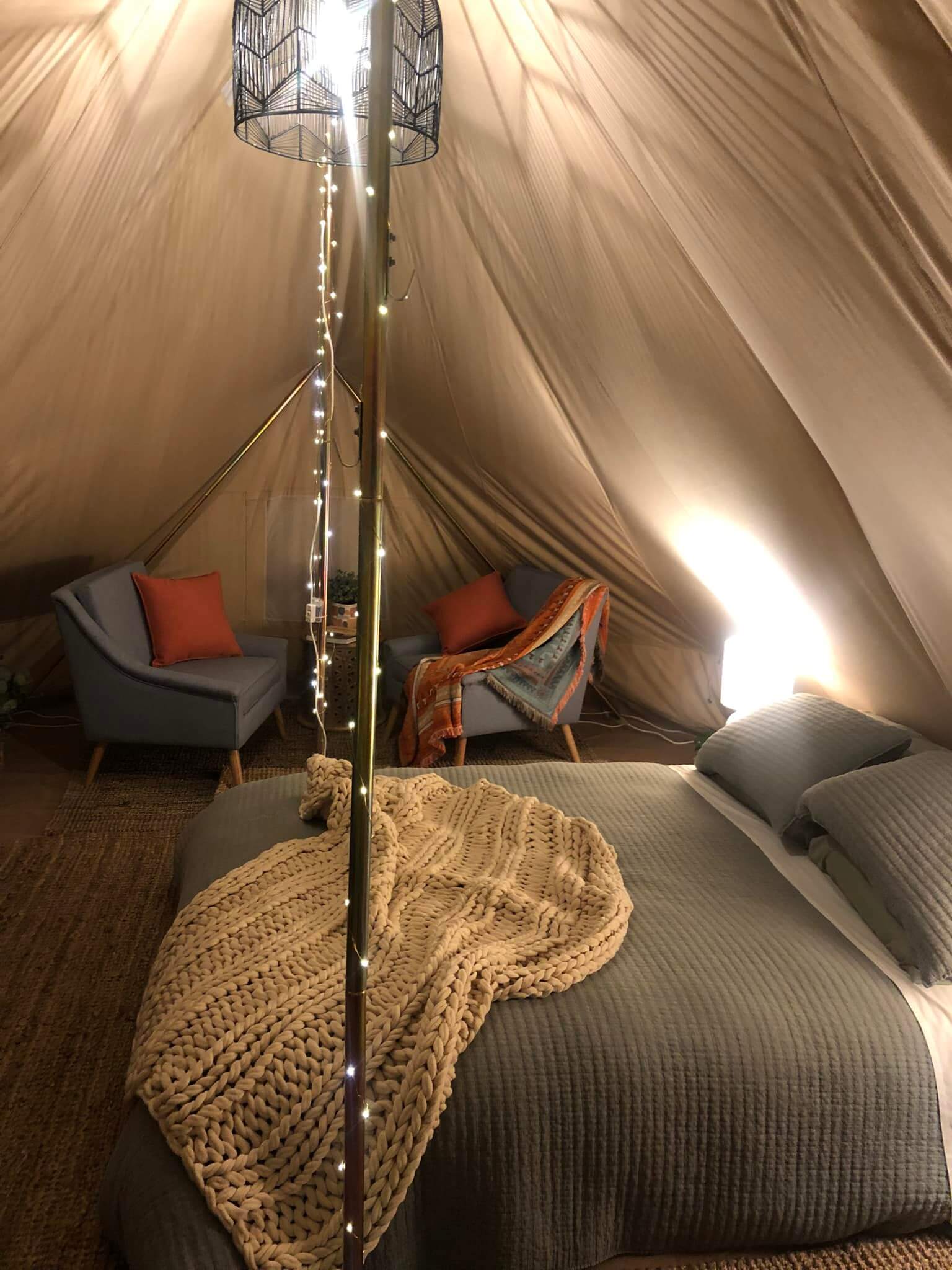
Marysville Holiday Park has three glamping tents, all couples-only, all on fixed decks with reverse-cycle split systems. Kookaburra is a 5m bell tent in a riverside spot on the Steavenson River. Black Cockatoo and Lyrebird are 6m x 4m twin-pro safari tents on elevated positions looking across the park.
Each tent has a queen bed, coffee machine, kettle, microwave, firepit and gazebo. The shared amenities block is a short walk. Photos, details and availability are on the glamping page.
Frequently asked questions
What is the most common type of glamping tent in Victoria?
Bell tents are the most common glamping tent type across Victorian operators. They turn up at holiday parks, standalone campsites and farm stays from the Yarra Valley to the Mornington Peninsula. Safari-style twin-pro tents are the second most common, particularly at operators running year-round stays.
Are bell tents or safari tents better for cold weather?
Safari tents are generally the better pick for cold weather. The rectangular shape takes active heating more evenly, and the upright walls leave more room for a proper reverse-cycle split system. Bell tents can work in winter if they’re well insulated and heated, but they lose warmth faster through the walls and sloping roof.
Do glamping tents have bathrooms inside them?
Some do, most don’t. Most Victorian canvas tents (bell, safari, yurt) use a shared amenities block a short walk from the tent, which is part of the campsite-style experience. Domes, pods and A-frames more commonly include private bathrooms. Always check the listing before booking.
Can you stay in a glamping tent with kids?
It depends on the operator. Many Victorian glamping tents are couples-only, particularly smaller bell tents and the luxury end of the market. Family-friendly glamping tends to use larger safari tents, pods or cabins with extra beds. Check the listing capacity carefully, since photos can make small tents look family-sized.
Which type of glamping tent is most popular at Marysville Holiday Park?
The two safari tents (Black Cockatoo and Lyrebird) tend to book out earliest in shoulder seasons because of the elevated positions and the extra indoor space. The Kookaburra bell tent is the pick for warmer-weather stays and for guests who want the classic glamping look.
Book a glamping tent in Victoria
At Marysville Holiday Park, the three tents (one bell, two safari) sit riverside on fixed decks with year-round climate control. The glamping page has photos of each tent and live availability.
For a broader look at what’s available across the state, the glamping in Victoria hub covers the operators and regions worth knowing about before you book.